
A note to readers
These notes summarise recent discussions on Campbell Tickell’s WhatsApp group for Chief Executives of housing associations and ALMOs across all four UK jurisdictions and the Republic of Ireland. A full summary of discussions from the inception of the group is available on request.
This is a closed group, open only to CEOs in housing associations and ALMOs. It currently has around 260 members.
While discussions are confidential and unattributable, members of the group are keen for the content themes and issues to be shared widely to assist with broader understanding.
Please note:
The following digest highlights matters that have been discussed in the group. None of the content should be treated as representing the collective views of the group as such or be attributed to any of its members. The group is an information-sharing forum and not a policy-making body.
Contact us
If you are a housing CEO who would like to join, please email james.tickell@campbelltickell.com or greg.campbell@campbelltickell.com.
Latest highlights, May – June
Assurance, Regulation, and Governance
1. Members discussed board assurance on tenant satisfaction and transactional surveys, including use of independent providers, digital tools and internal audit validation. Some felt transactional surveys are best treated as indicative management information rather than externally reported assurance.
2. Members shared examples of concise board briefings and training on regulatory responsibilities, particularly for smaller providers, emphasising accessible materials that support oversight without unnecessary technical detail.
3. Members compared governance structures, including audit and risk committees, internal audit arrangements and leadership team models. They stressed the need for clear meeting purposes, links to the board cycle and defined roles for executives, senior managers and functional leads.
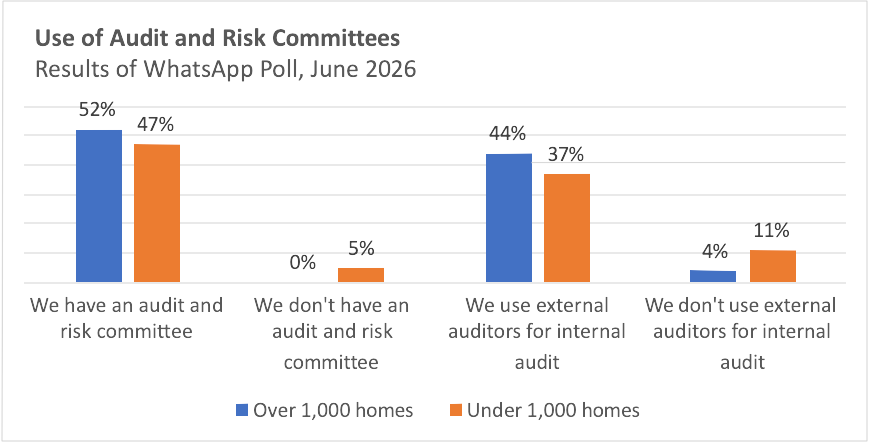
4. A quick poll found that all responding organisations with over 1,000 homes had an Audit and Risk Committee, as did most smaller providers. Most use external internal auditors, though some smaller providers use their committees for this role.
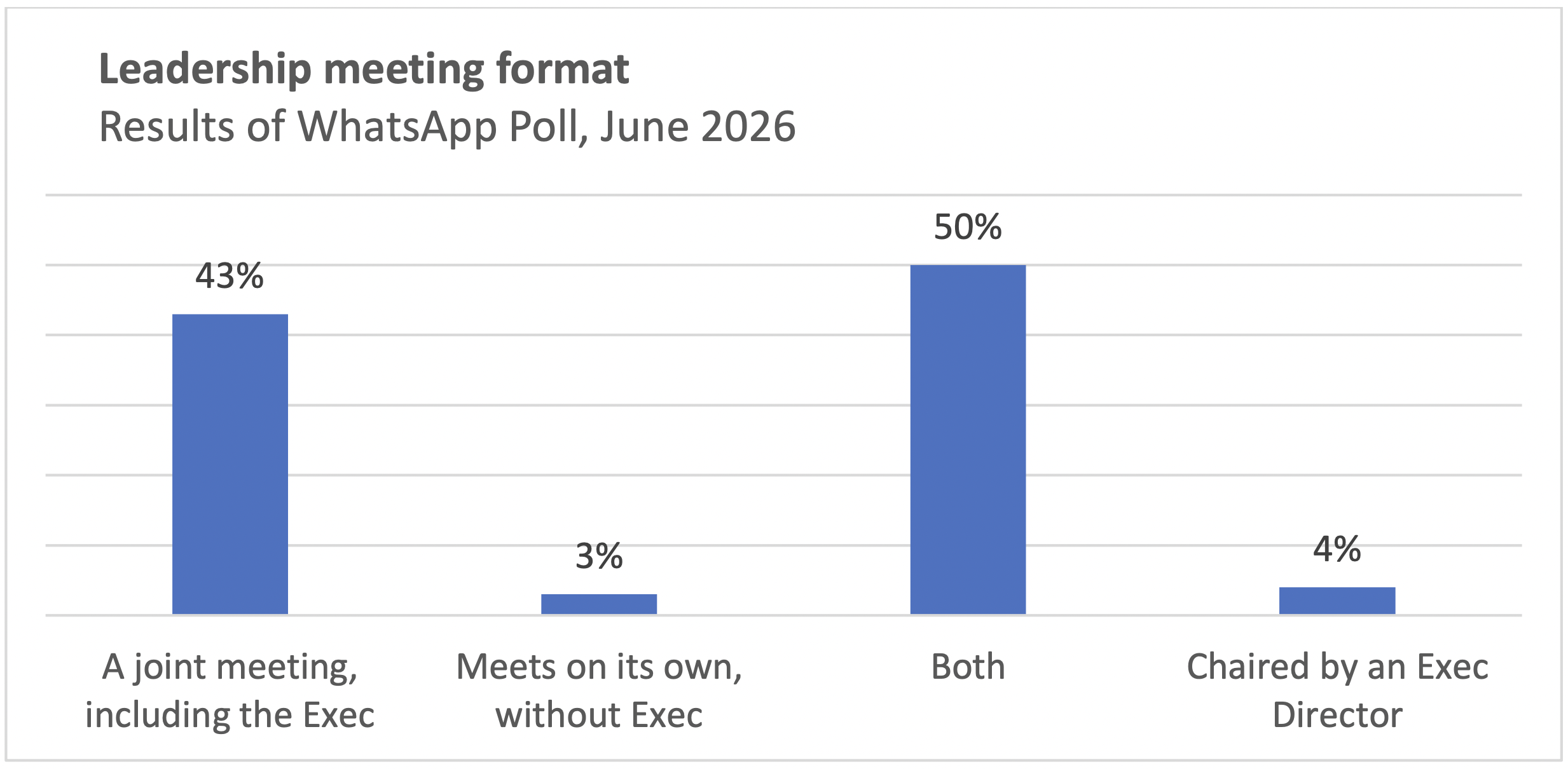
5. Members discussed leadership team meetings and executive involvement.
Most organisations involve executives through joint meetings or mixed arrangements, suggesting close executive engagement in organisational leadership.
Hybrid working
6. CT polled members on office attendance expectations for executive teams, directors and heads of service.
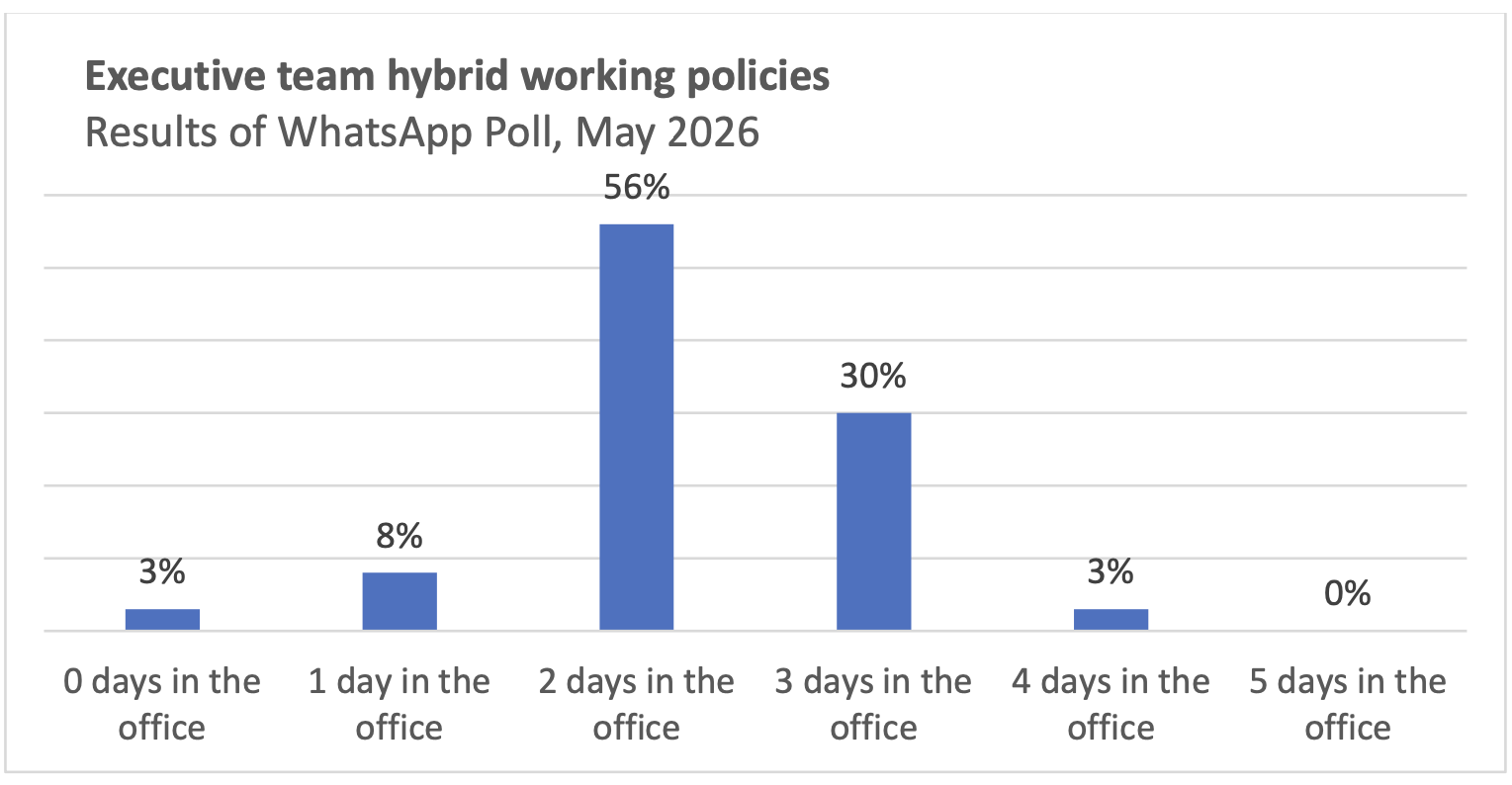
7. Most organisations use two to three office or service-setting days as a typical pattern, while avoiding strict blanket mandates.
8. Members stressed that working patterns should reflect service needs, customer visibility, collaboration and role type, distinguishing home working from time spent on estates, in schemes or with partners.
Procurement and specialist support
9. Members discussed strengthening procurement in smaller organisations, including consultancy support, frameworks and dedicated roles. They noted the value of both direct savings and reduced senior management time.
10. Members also shared procurement policies reflecting recent legislative changes, highlighting proportionate documentation for smaller providers, particularly where development activity is limited.
Access, repairs, and safety
11. Members discussed repairs access when residents do not allow inspections or compliance checks, including co-ordinating inspections with repair appointments while managing legal, safeguarding and operational risks.
12. Discussion also covered responsive and routine repairs, pest control responsibilities, and tracking Decent Homes and Housing Health & Safety compliance through both stock condition surveys and reactive reporting.
13. Overheating was a practical concern during warmer weather. Members shared approaches including temperature monitoring, welfare checks, use of cooler communal spaces, ventilation reviews and planning for future heat-related regulatory expectations.
Housing management systems and digital strategy
14. Members discussed housing management systems for smaller providers, including integrated housing, property and finance functions, implementation, configuration, supplier support and system-change challenges.
15. Members noted that selection should consider functionality alongside implementation capacity, data quality, staff adoption, supplier responsiveness and disruption risk. Future developments, including AI-enabled tools, may also affect the market.
Complaints and ombudsman delays
16. Members discussed delays in complaint determinations, including the impact of older cases being allocated or decided long after the original events, and concerns about timeliness, communication and learning.
17. Members also noted ongoing disrepair claims and cold-calling, emphasising robust repairs records, clear complaint handling and careful resident communication.
Rent and remuneration
18. Members discussed rent convergence and target rent calculations during periods of capped increases, noting the need to consider historical caps and exemptions.
19. Members also shared salary benchmarking and benefits review approaches, commonly using external benchmarking every two or three years to support remuneration decisions.
Resident involvement and participation
20. Members discussed modest recognition payments for resident scrutiny panel members, including vouchers, travel support and refreshments, while checking benefit implications and seeking written confirmation where possible.
Policy sharing and board development
21. Members requested and shared policies, role descriptions, governance materials, AI policies, arrears and bad debt policies, procurement policies, board training resources and senior independent director role descriptions.
22. Members also discussed development for aspiring board members, including induction, mentoring and structured board trainee routes.
KPIs
23. CT ran a quick survey about KPI reporting in March. The results inspired our recent CT Brief article around bringing more consistency to housing performance reporting.
The group is open to all housing CEOs who are not yet members.
To join, please contact james.tickell@campbelltickell.com or greg.campbell@campbelltickell.com
For any media enquiries, please email: zina.smith@campbelltickell.com