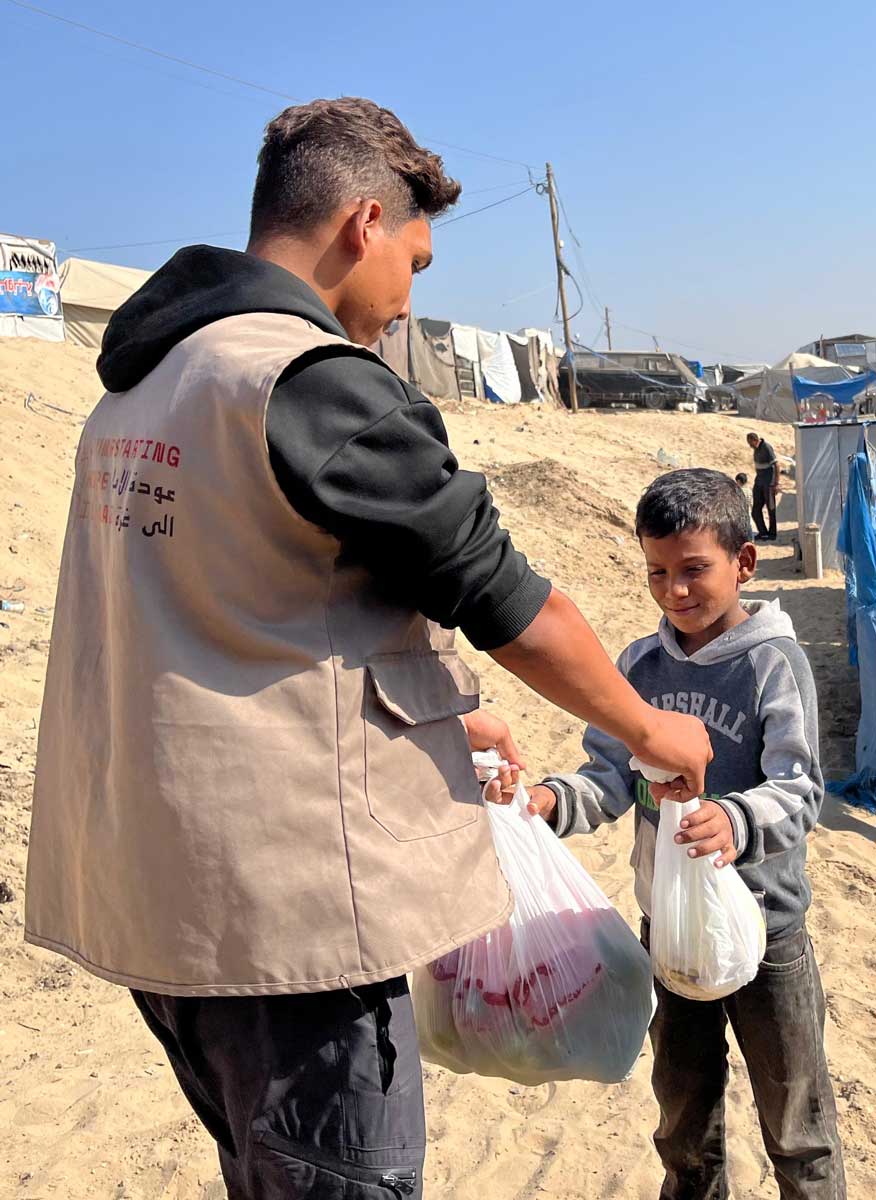
Displaced Gazans receive food aid (image: JHG)
Environmental peacebuilding
How cross-border partnership Jumpstarting Hope in Gaza is delivering scalable, off-grid humanitarian and environmental solutions to the people of Gaza

GROWTH, REGENERATION & DEVELOPMENT
Dr David Lehrer
Director, Centre for Applied Environmental Diplomacy, Arava Institute for Environmental Studies
Dr David Lehrer
Director, Centre for Applied Environmental Diplomacy, Arava Institute for Environmental Studies
Issue 81 | December 2025
After two years of catastrophic war, Gaza faces an unprecedented humanitarian and environmental crisis. While a fragile ceasefire may hold, hope can feel elusive. Yet, from the very start of the conflict, organisations in both Israel and Gaza have been working together, united by a shared commitment to humanitarian action and environmental resilience. One such collaboration is Jumpstarting Hope in Gaza (JHG).
Led by Damour for Community Development in Gaza and the Arava Institute for Environmental Studies in Israel, and supported by other Palestinian, Israeli and international partners, JHG has delivered scalable, off-grid humanitarian and environmental solutions in Gaza since 2024.
This transborder partnership focuses on the rapid deployment of decentralised water, sanitation, hygiene (WASH) and energy solutions, providing immediate relief while laying the foundation for long-term recovery.
Environmental and humanitarian actions in 2025
In 2025, JHG supported Gazan communities through a range of targeted interventions:
1. Food assistance:
- distributed 670 family food packages (10 kg of vegetables each)
- reached approximately 3,350 individuals facing food insecurity
2. Shelter support:
- provided 700 emergency tents via UNICEF
- prioritised for newly displaced families in overcrowded areas such as Al-Mawasi
3. WASH infrastructure:
- constructed 75 toilets at Misk & Layan Camp
- improved sanitation in line with Sphere humanitarian standards
4. Hot meal distribution:
- delivered 72,000 hot meals to displaced families lacking cooking facilities
5. Emergency portable water supply:
- operated 10m³ daily water trucks for 60 days, July through September
6. Community well access:
- built a new manual and solar-powered well
- produces 2-3m³/hour of non-potable saline water for hygiene use
7. Cross-border advocacy
- engaged the Israeli Knesset to improve humanitarian access
- collaborated on mosquito control to mitigate public health risks
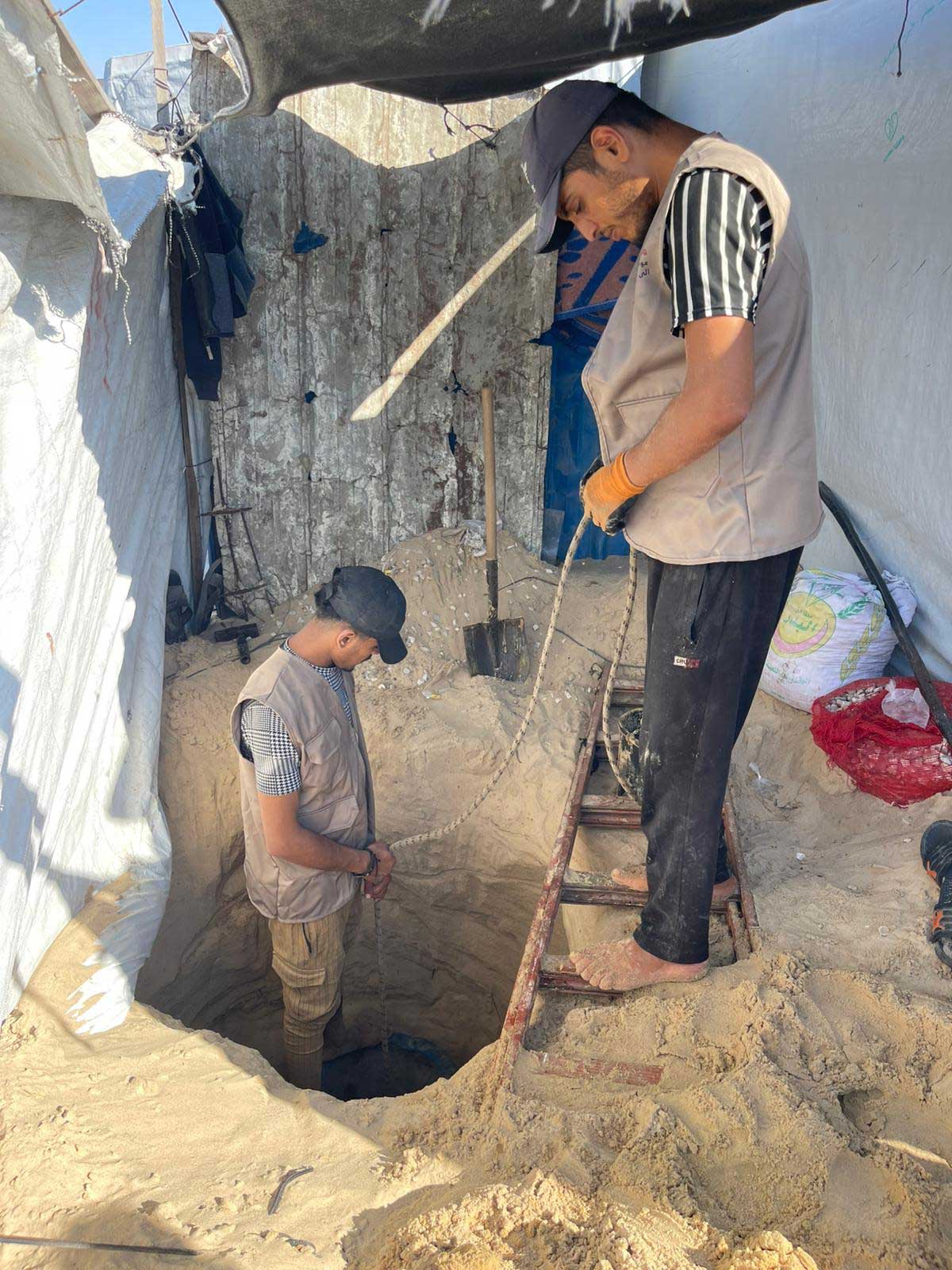
Additional achievements:
1. Establishment of two new displaced people’s camp, in response to the displacement from North Gaza: a) Samar Camp in North Mawasi – housing 150 families. The camp has weatherproof tents, toilets with sewage system, showers, 3 potable water connections and receives daily hot meals from WCK. b) Asdaa Camp – West Khan Younis – housing 140 families, basic sanitation services and connection to local water well.
2. Distribution of 7,200 waterproof tarps ahead of winter. Distribtued to our camps and beneficiary lists, for better winterisation.
3. Brought into Gaza 4 WaterGen Gen-M Pro system. These are atmospheric water generators that create high quality drinking water from the humidity in the air. They are being installed in the International Medical Corps new field hospital in Gaza City and will become operational beginning of December.
Next steps: the Green Shelter model
The JHG coalition is now focused on scaling sustainable relief solutions that address both immediate needs and long-term recovery. Central to this effort is the Green Shelter model: a modular, adaptable design for dignified shelter.
With 92% of homes in Gaza damaged or destroyed (according to UN reports), hundreds of thousands of people remain displaced. The Green Shelter model is designed to meet this challenge, with the potential to serve up to 500,000 displaced people.
Design overview (100-family unit):
- Supports: 500 people
- Water: 15-20 litres per person daily via desalination, trucks and atmospheric generators
- Sanitation: toilets for every 20 people (starting at 1:50), separate facilities for men and women, showers and on-site wastewater treatment
- Energy: solar-powered microgrid for clinics, lighting, water and refrigeration, with scalable back-up systems
This off-grid, eco-friendly design reduces fuel use, cuts costs and protects the environment. Once regulatory permissions are granted, deployment can begin within 2-3 months.
Beyond its humanitarian impact, the model symbolises cross-border cooperation. For Gazans, it offers a lifeline built through partnership; for Israelis, it demonstrates the power and necessity of constructive collaboration. Together, it provides both a roadmap for dignified relief and a platform for rebuilding trust.
“Beyond its humanitarian impact, the model symbolises cross-border cooperation. For Gazans, it offers a lifeline built through partnership; for Israelis, it demonstrates the power and necessity of constructive collaboration”
A Sustainable Future? Rebuilding Gaza
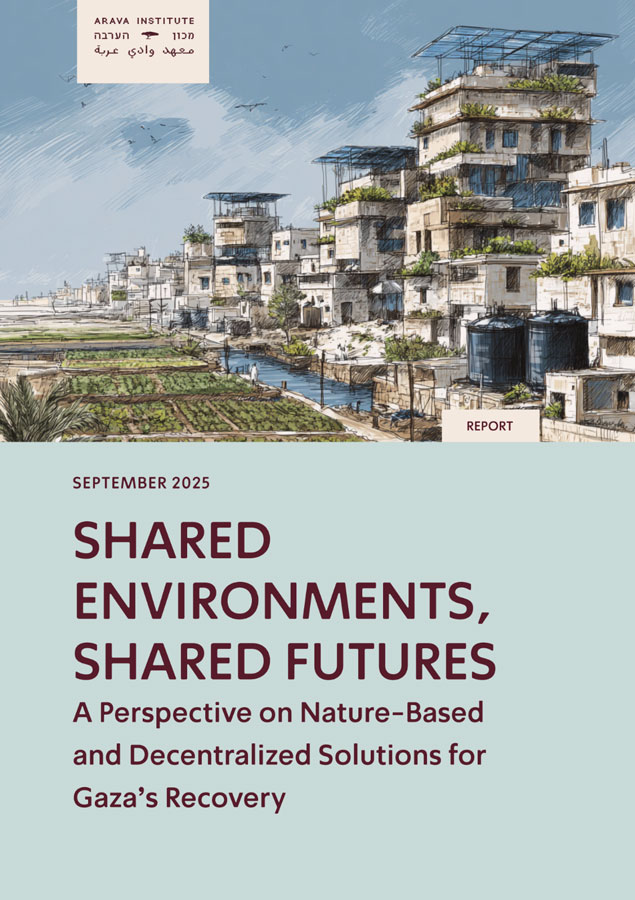
In our new report, Shared Environments, Shared Futures, we outline a phased recovery model rooted in nature-based solutions and decentralised technologies. It emphasises Palestinian-led, community-driven approaches, robust governance and inclusive development.
In the report, we recognise that political agreements and environmental restoration are essential for success. Moreover, empowering communities through education, citizen engagement and private sector participation is key to healing divisions and building a shared future.
We are looking for partners in Europe who would be interested in supporting this initiative.
To learn more about Jumpstarting Hope in Gaza, contact David Lehrer.